
Sunday, 28 April 2013

Thursday, 25 April 2013
Top 10 Commandments of Affiliate Marketing Ten best practice tips for a profitable affiliate marketing business
Affiliate programs can be a big source of revenue. The key to maximizing your earnings is engaging your readers. Unlike traditional ads where you are paid for impressions or clicks, affiliates are only paid when/if a specific action is performed. The action might be a purchase or signing up for a newsletter, but regardless, you are not paid until you've compelled your readers to act.
With that in mind, here are the Top 10 Commandments for affiliate marketing success.
1. Know Your Audience
The most successful way to use affiliate programs is to anticipate and meet the needs of your readers. Consider why they are coming to your site. What are you providing that they are looking for? Make sure the affiliate products you are promoting provide a solution to your audience's problems.
If you are writing about sports, don't put up affiliate ads for printer toner just because everyone has a printer and those programs have a high payout. The people who are coming to read commentary or get stats for their favorite teams aren't thinking about those things when they're on your site.
The more relevant the ads are to your readers, the more likely they will use them.
2. Be Trustworthy
Readers are savvy. They know an affiliate link when they see one. If you break their trust by promoting a product you don't believe in or take advantage of their visit with too many ads, they will leave and never come back.
It is your repeat visitors that will drive traffic. They are the ones who will give you linkbacks, spread the word, and recommend your site as the go-to place for valuable content. You need to build a relationship based on genuine content.
If your visitors don't think you're being honest, they won't read anything else you have to say.
3. Be Helpful
Think of affiliate ads as additional resources that complement your content. Give value to your content by making it helpful, useful, and informative.
Don't put up a list of your favorite books, hoping people will click on the affiliate link, purchase the books (just because you listed them), so you can cash in on a sale. Take some time to write a detailed review, and use affiliate ads to point them in the right direction if they decide to act on your information. That's what affiliate ads are for. If you write a great review recommending a book and readers buy the book because of it, you should get something for that.
But just throwing out links to products with no rhyme or reason will result in a quick exit by visitors.
4. Be Transparent
Always disclose your affiliations. Your readers will appreciate your honesty, and will feel better about contributing to your earnings. If they sense that you are being less than honest about your affiliations, they are savvy enough to bypass your link and go directly to the vendor just to avoid giving you referral credit.
Honesty and full disclosure is a necessary part to building a loyal reader base. They know they are supporting you by using your referral links. Make them happy and eager to do so.
5. Select Carefully
Take the time to go through all the different options for products or services available through the programs. Put some thought into which products or services your readers may need or like. Also, change the ads around often, try different ones, and use different graphics and text to see which are the most effective.
It may take some time before you figure out the best formula, and you may also find that you need to continually rotate ads to attract more attention.
6. Try Different Programs
If one particular program doesn't seem to be working for you, try another one.
Affiliate programs don't look the same. They offer different products, services, and payment structures. Some programs will have a lifetime payout on sales while others will limit it to 30-90 days. Some programs allow much more flexibility in the types of ad units available, as well as colors and design so it fits better on your site's layout.
Also, check your favorite vendors to see if they run their own affiliate program. Sometimes you can go directly to the source. You're not limited to big affiliate networks.
Integrate systematic ad testing into your strategy to maximize your profits.
7. Write Timeless Content
Your old content can still be valuable even though it's no longer on your front page. Take advantage of the long term opportunities by making sure you provide timeless content.
If visitors come across your older content first, and find that it offers dated information, they will leave right away. Of course, information moves forward, so relevant content changes quickly. You can make your content timeless simply by adding links to your updated articles on your old ones.
Many platforms allow you to show "most recent" or "most popular" or "related articles" on every page, so no matter how old the article is, it will always show access to your new ones. Your old content can make money for you indefinitely.
8. Be Patient
Affiliate revenue grows and builds up with time. Remember that some programs offer lifetime payouts. If you refer a visitor, you may continue to make money from that one visitor even if he doesn't come back to your site. Also, as long as you have referral links still active in your old posts, they may still payout for you.
Affiliate programs aren't a get rich quick plan, but it provides opportunity to make passive income in the future.
9. Stay Relevant
Keep up to date on the latest offerings of your affiliate programs. New ad units, advertisers, and tools are constantly being added to improve usability and be more visually appealing. Small changes go a long way in motivating action by readers. You may be left out in the dust by being complacent with your strategy.
Don't get lazy about monitoring trends and exploring new opportunities.
10. Content Comes First
Above all else, your content must be your highest priority.
Your content is your foundation, the life blood on which the site exists. Without valuable and helpful content, readers won't come. Focus on providing excellent content, and the monetizing strategies will work out.
Once you start compromising your content to cater to the affiliate programs or any other money making venture, you will lose your readers. Once that happens, you will lose the opportunity to receive any earnings from any of your ads, be they CPM, CPC, or referral based
Sunday, 21 April 2013
Online Surveys: Can You Actually Earn Any Money?
Online Surveys: Can You Actually Earn Any Money?
You've very likely seen pitches like this that you receive via spam:
"Earn $140 per week! Earn $560 a week! Earn $6,270 a year! All by just sitting home, sipping coffee, and filling out surveys."
Is this too good to be true?
Yes. Although it does make sense that a few companies are willing to pay for market research by using online surveys, we believe this is not a good way to spend your time.
Here's how the scam works: Scammers use spam and promise you quick money for little effort. They claim that you only need to spend a few minutes and you'll earn excellent money. Of course, you have to pay the "low" price of $34.95 to learn how to do this.
So their goal is to get thousands of people paying $34.95 (or whatever amount is charged) for the info.
This would be fine if they didn't spam -- and actually delivered what they promised. However, the vast majority of these online survey products are worthless.
Now, you may be thinking, "Well, I'll go online and find a site that screens out the scammers and ranks paid survey sites, and that way I'll find the legitimate online survey companies."
This makes sense on the surface, but unfortunately, many of these "ranking" sites may actually be middlemen who are paid commissions by the survey companies for referrals. Often, whoever pays the most to the ranking site gets the highest rating, and the online survey companies they rank well are not necessarily reliable.
Are there legitimate online survey companies? Yes, there must be, but unfortunately, it's almost impossible to find them. It's like picking a needle out of a 77,300,000 haystack (type "online surveys" into a Google search for similar results).
In fact, legitimate online surveys often are quite long, which means they take awhile to fill out. That's one of the reasons the hype isn't true.
(As an aside, if you do online surveys, you shouldn't scam the online survey companies either. Don't have your kids fill out the surveys or just make up answers. After all, legitimate companies want legitimate answers from legitimate respondents.)
Given that the hype is wrong, how much can you realistically expect to earn doing online surveys?
A friend of ours decided to find out. She is one of the fastest typists we know, and she's extremely efficient and skilled at administrative work.
Since she wanted some extra income she could earn at home in her spare time, she spent a week or so to see how much she'd earn filling out online surveys.
The results? She earned about $0.37 an hour!
Would that be what you'd earn? We don't know. But we believe there are lots of better ways to earn money by working at home.
We've found that people WANT the hype about online surveys to be true. However, in order to make money on the Internet working at home, it takes (gasp!) work. The promises about online surveys are at best not realistic.
Note: Yes, you definitely can earn money on the Internet working at home. Many people do this very successfully. But not by doing online surveys, stuffing envelopes, or medical transcription. ;-)
Now, we'll probably get a lot of email telling us that we're wrong. We've followed this area for quite awhile, and we believe that our advice about online surveys is correct for the vast majority of our subscribers. (Please don't send us these emails, btw.)
Nonetheless, if you're determined to go ahead with online surveys anyway, here's some advice:
First, ignore all spam solicitations. They are all scams.
Second, use Google or your favorite search engine to see if you can find info on the company, including complaints. (Not finding complaints means nothing, btw. People are often too embarrassed to complain when they realize they've been scammed. Or the company may have changed their name or website ten minutes ago.)
One last point: It should be obvious that in this issue we're not talking about free online surveys and polls that you find on many websites. For example, we're not referring to answering the QuickVote poll on the CNN website. ;-)
Bottom line: Save your money and your time -- avoid online surveys.
Friday, 19 April 2013
Meet the man who makes six figures a quarter just from using Twitter
For anyone who is semi-active on Twitter, the chances are they have been followed, retweeted or received a direct message from someone who calls him or herself a ‘social media guru’. The characteristics are always the same: countless thousands of followers, which almost exactly mirror the number of people the person follows, with plenty of self-promoting keywords and hashtags filling out their profile.
Social media gurus (mavens, ninjas, masters) are everywhere you look on Twitter. According to FollowerWonk (via Adage), there are now 181,000 people who use one of these four terms in their Twitter profile. The worrying thing is that the number of self-titled social media specialists has rocketed from a modest 16,000 in 2009, a 1031 percent increase in a little over three years.
Many so-called experts funnel their clients into made-to-measure tools, without a methodical strategy for how to use them or how to engage with the people that they want to be engaging with. Often, it’s a race to get as many Likes, Retweets, Follows or Pins as possible with little or no care for providing value to the people that they want to engage. It’s a matter of setting up Tweetdeck or Hootsuite and getting someone posting updates, without telling them why it matters or what they need to say or do to connect with their target audience.
Despite this, there are people who have ‘cracked’ the code behind what makes a good social media marketer. Some have authored books on the subject, others create hugely successful businesses teaching others some of the secrets of the trade. Others don’t feel the need to tweet the fact.
Twitter business

It could be argued that one of these people is Branden Hampton. While his name might not sound familiar, it’s almost certain that you will have encountered a tweet from one of his Twitter accounts.
Hampton, along with his business partner Ryan Detert, runs California-basedInfluential Media Group, a company that specialises in providing clients with various social media strategies for one social network: Twitter. While the company counts over 30 million followers from the accounts that it owns and manages, Hampton personally oversees 24 Twitter accounts that have over 11.5 million followers in total.
The company also helps celebrities, sports stars, music artists and bands develop ways to engage more with their followers.
Ever seen an inspirational tweet in your timeline from @Notebook? That’s one of, if not the most, successful Twitter properties that Hampton owns. It’s run by his fiancée Stephanie Perez and ranks number 168 in the top Twitter accounts on the planet.
Why Twitter?
Why Twitter?
Signing up for an account when Twitter first launched, Hampton says he was one of the many early adopters who didn’t really get or understand how the service worked, with it taking him another 6-7 months to circle back to it. At the time, Ashton Kutcher was racing CNN to become the first Twitter account with one million followers, and so decided to give it another chance.
“I soon realised that people, instead of updating like they would on Facebook, people were providing content – this was very intriguing to me. Whether they were quotes, jokes or other content, people were reposting it and they were sharing it, and it was allowing people to grow,” says Hampton. “I’m a very competitive person, so I thought that it if there’s somebody out there who is funny, they can get 10,000 followers, so I realised that I could get 10,000 followers by talking about things I like to talk about.”
Starting with a personal and another more risqué comedic Twitter account, Hampton saw his follower counts rise into the tens of thousands. Leaning on his marketing background and previous sales experience, he set about creating a portfolio accounts that would not only allow him to extend his business, but also demonstrate how lucrative Twitter could be as an industry in itself and “show up the social media gurus in the industry that are teaching the wrong things.”
Notebook
Hampton launched @Notebook in February 2011, attracting 30,000 followers in three weeks. Today, it has over 4 million.
(Graph from TwitterCounter)
How did @Notebook get so many followers? Its creator explains:
“Let’s say I had a 1000 followers at the time. I would go to someone with 2000 followers and ask them “Hey, why don’t you tell people about my page and I will do likewise.” I probably did that for 2-3 weeks on The Notebook, and got some really good traction and gained about 30,000 followers during that time.Most of what I did was to post content that was retweetable. I would find things that would resonate really well, and I knew from my personal page that Twitter users aren’t going to retweet a message saying I am going to Starbucks. That’s not the type of stuff that resonates.That way I was able to get new followers and acquire new people towards my brand. I posted content that goes beyond my own pages and extends to their followers, providing something that has value. That may apply to 5% of my followers and they actually retweet it, but they are extending that value to their own follower base.“It’s the numbers game, the more tweets that you post that resonate beyond your own followers will give you the ability to attract new ones. I don’t have to be myself to manage those pages and own those properties, I have to be whatever the personality is needed to be behind that page.”
Evolving beyond The Notebook, Hampton added other accounts, each catering for a specific niche industry. Currently, he manages a skincare Twitter page, personal fitness (and nutrition) pages, owns accounts that focus on the household and also fashion and style, a Mom Blog and numerous other accounts that fall into the entertainment category.
Content writers
While he owns most of the digital properties, Hampton doesn’t maintain them all. The popular Twitter accounts are managed by a trained professional, directly employed to dispense advice and information appropriate to each industry and that person’s expertise.
It’s the same for The Notebook (or Notebook of Love as it is known now).
“I had the idea to start the page and told my fiancée, she is the face of The Notebook,” Hampton emphasizes. “I operate the logistics, but she is the one who digs into what needs to go onto the page from a woman’s perspective. She is the voice of the tweets when they go out and I handle the business and marketing side of the page.”
“I own a skincare website, but I don’t want people thinking skincare content is coming from me. I don’t want to mislead people,” he adds.
By creating, maintaining and interacting with followers, Hampton’s network of Twitter accounts demonstrate that if it is done right, simple quotes can be retweeted hundreds — if not thousands — of times, something that the “Social Media guru” can only dream about, even if he/she has a similar number of followers.
“When people follow you on Twitter, they follow you for your content but there is a specific subset of people that say: ‘I want followers, so if you follow me, I will follow you and I don’t care what you are posting.’ In the early days, those that understood Twitter a little more than everybody else caught on and realised that they could get 100,000 followers by following 100,000 people.“This led to people thinking that because they managed to get 100,000 to follow their page, they must know what they are doing. They would then go and edit their profile and add ‘Social media guru’ to it, and for a very high percentage of them, their content isn’t even engaging – they may send out a tweet and get one response.“There will be instances where I post a piece of information and I get 400 retweets of a simple quote or I ask a question and receive 30-40 responses. I’m in the business of boosting engagement, and if people are engaged, they follow because they like it. This has allowed me to build accounts with more than a million followers, I’m not just following people and having them follow me back and calling myself an expert.”
Making money
“Right now we are in the process of expanding outside of social media,” Hampton tells me. “For example, we are building a fitness website, one for The Notebook, our skincare and fashion pages and our beauty one just went up.”
Many media companies may focus strictly on building a website and then connecting social media accounts to it, Hampton believes his network can turn that idea on its head.
He explains:
“Twitter essentially is blogging, but it’s microblogging. A lot of people don’t want to read a four page article any more, they want to read 140 characters and have all of the information tied into that. If a tweet includes a link, they can get a longer one, two or three paragraph version, and that’s what people are after nowadays.“People are now so easily distracted, which is why around 70 percent of people are reading updates on their phone.“We are doing it backwards, building it via first-person content on Twitter so we can then offer people a longer version and direct them to something with a little bit more detail. It will be an additional revenue source for us, because we don’t do this for free. It means we can attract advertisers that correlate with the industry we are covering, so if we write a fitness article, we match fitness-related advertisers for readers.”
Which brings us on to the subject of monetization. How lucrative can running Twitter accounts be?
“Very lucrative. It’s my full-time income,” Hampton tells me. “My entire earnings from social media are in-stream advertising, where we publish content in the Twitter stream via a priced tweet or on a performance basis where advertisers pay for the number of visitors we send them.”
As a relatively uncharted industry (some startups, like Adly, have attempted to harness the power of Twitter advertising by creating their own ad services that run in-stream ads) but for the most part, it’s Twitter that makes most of the big money, pushing its own Promoted Account, Promoted Tweet and Promoted Trend services.
But that hasn’t stopped companies and media agencies like Associated Press from running their own sponsored ads, bypassing Twitter’s own advertising services.
Thanks to Twitter’s open nature, some have worked out the formula to Twitter advertising success:
“It’s an uncharted industry, there’s no set way to do it and that’s why people haven’t really flocked to it because they have to figure it out themselves. I’ve figured it out.“I look at Twitter accounts, Instagram handles and web pages as digital real estate. By the time people realize there’s money in digital real estate, I’m going to own all of the largest properties.”
Hampton believes Twitter can become the new TV, or the new magazine. When a Twitter account posts in-stream advertising, users immediately call it spam. However, when the same people read a magazine article on ‘How to apply your makeup,’ what are they going to find on the very next page? Nearly always, it will be a Revlon/Covergirl/Maybelline makeup advert.
It’s the same for fitness magazines – is it a coincidence that you would find diet pill or supplement adverts within its pages?
Hampton believes Twitter users should be troubled no more by Twitter advertising than they should campaigns run in their favorite magazine or TV show:
“It is all targeted. Everything that is happening around us when it comes to advertising, is the same thing that I’m doing on Twitter, I’m just doing it in a new uncharted territory that people aren’t familiar with.“Nothing has changed, on my fitness page I quote fitness, workout and nutrition related ads, on my Notebook account I run dating ads, and on my beauty page we highlight makeup ads.“When you go to TV to watch a show, you have to pay the cable company to get certain channels and they advertise to you. If you read a magazine, the chances are you bought it or you have a sub that you paid for, and they advertise to you. With the Twitter streams, you go on the accounts for free, and you get between 12-15 pieces of free content each day and then we will pepper in the ads in the middle of that, which correlate with that industry. You may get 15 pieces of fitness content, but we will place three fitness-related ads in there too.“Most TV shows have between 10-18 minutes of ads for an hour show. People are willing to watch 15 minutes of commercials in order to see their favourite show. I don’t know anyone out there that is willing to watch 45 minutes of commercials to see that show.“I’ve just taken the business model of the magazine and made it modern.”
To ensure that he can be contacted by potential advertisers, Hampton ensures that each Twitter account has an email address in its profile. On a day-to-day basis, Hampton is manages up to 13 email addresses, each receiving up to 15 advertising inquiries a day across his sites.
Doing what works
To ensure the network of content pages appeals to as many people as possible, some accounts have Instagram, Facebook and even Pinterest accounts, which all feed each other. The idea is that people have different ways of interacting with content, especially when it comes to learning and perception. While it’s easy to describe something to one person, it may require physically showing it to someone else.
This influences how Hampton and his team interact using social media. Some people may prefer pictures over words, so they may follow the Twitter account but find it easier to engage with its Instagram account. By diversifying how information is shared, followers have lots of options as to where they get their content from, ranging from a photo with the word ‘Love’ written across it or a three page article on why a relationship is failing.
This approach has led to many copycats and similar accounts on various social networks, ideas that have seen other individuals amass more Likes or Followers on Facebook, for example.
However, Hampton couldn’t care less. To him, Facebook is not where money is made:
“Facebook is very restrictive, as it doesn’t allow you to create your own sponsored posts any more. Essentially, you have to notify people that it’s sponsored, Facebook doesn’t allow that whether you denote it or not.“It’s a stubborn company, and the only people that can make money on Facebook is Facebook. I have 100,000 fans on Facebook, compared to over 4 million on Twitter, but there’s no way to monetize it.“Even though we want to provide an additional outlet for content, our ultimate goal is to make money from doing so. If you can’t make money from doing that, we share content on services that can.“Say Apple wants to do a campaign. It has $5,000 to run a small campaign on social media. On Twitter, I can post about an Apple product, I can get paid for it and Twitter encourages this because it builds value and engagement on their platform.“Facebook insists that companies refrain from running campaigns with users and spend their money on Facebook’s internal ad platform, Facebook Ads.”
Helping to build success
While Hampton (and Influential Media Group) run their own accounts, they also help some well-known celebrities, sports stars and musicians learn what it takes to be adept at social media.
Hampton is quick to disassociate himself from any suggestions that he tweets on behalf of his clients, instead he says that his job is to impart advice and share elements of what he believes is the formula to successful social media – which is when a person is able to say and share things about who they really are.
For celebrities, they are a rare number of users that people actually care if they tweet they are at Starbucks or what they are eating. If you’re a brand or a regular user, you’re going to need to be a bit more engaging.
“It’s almost like the more basic and revealing about the person it is, the more engaging it is to their followers. We could suggest something for them to post and it gets 500 retweets, but if they ask ‘where should I eat tomorrow’ they may get 2,000 replies.“The way it works is that we meet with them and/or their management, we initiate a relationship and work out what their goals are and intentions with social media. Some people just want to have a presence on social media channels and it’s not about highlighting the business that they have (movies, music etc).“The other aspect is that social media becomes an extension of their business. They may have products that they want to sell — products, merchandise, additional music downloads or share a movie trailer when it comes out. If we go in that direction, we can consult with them on what content they should be posting and what they should be staying away from.”
From these meetings, a “recipe” will be drawn up, and that Twitter user (whether it be me, you or Britney Spears, for example) will be advised on how many photos to post a week, the topics and things they should talk about, what they should do to increase the chances of seeing their messages retweeted or how to phrase questions to get more of a response.
Essentially, the end goal may be to get more followers. But Hampton and his business will help them brand themselves on social media and provide, as an extension of his own business, a way to resonate their content across his own networks, in order to highlight a certain celebrity has a Twitter account.
Not every celebrity is like Justin Bieber or Kim Kardashian, who have millions of followers. By sharing them on his own networks, Hampton is able to grow their following using the power of recognition.
The beauty of the Twitter model is that services can be adapted and revenues can be based upon a number of different structures. If someone wants to have a social media presence or wants to build an extension of their business, different payment structures can be arranged.
Some of Hampton’s clients will pay a retainer, some will pay a set fee, some will pay commission if they want to push merchandise or album sales, while some pay a percentage of revenue. There are lots of different models.
“With social media, it hasn’t been around long enough and nobody has done it to the point where someone can give you a menu and you can place an order,” notes Hampton. “Social media is so diverse, there are tons of different things that can be done and it’s fully customizable. You can pay a certain price for things, while others are based on performance.”
With so many tools able to track performance on Twitter, social media advertising has the power to (and has previously) negatively impact business industries because everything is trackable, giving power back to those that place advertisements.
“If you place an advert in a magazine and offer someone $10,000 to market their company, there are limited ways in traditional media to gauge performance of a campaign. However, someone can come to us and know to a tee what they spent with us and what their upside was,” he adds.
Tools of the trade
The beauty of a solely Twitter-powered business is that to manage a company, all that is needed is a smartphone and a computer. It means that work can be done from anywhere there is mobile or WiFi reception, from anywhere in the world:
“If I am out and about with my iPhone and my MacBook and someone comes in and steals everything in my house, I could go to Starbucks and use their free WiFi and maintain my business as it is,” Hampton explains. “I use scheduling software to maintain my content, for example the appropriate person managing content for that page will have posts ready seven days ahead of when they are needed. Other than scheduling software, I use Twitter.com, my advertising platforms, I use link shorteners – but there’s nothing else.”
Hampton says that his company is currently in the process of building custom analytics tools for its customers, to give them all the information that they want. But as it stands now, everything is managed used publicly available tools.
At the end of the my interview with Hampton, I asked him if it was possible to make, say, six figures a year from Twitter.
His response? “No, you can make six figures a quarter.”
Monday, 15 April 2013
11 Creative Ways to Make Money Using YouTube
How To Make Money Using YouTube
1 – Sell your own Products

2 – Tutorials
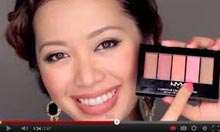
3 – Create a Series

They have had so much success they can now afford to hire a team of ten employees to work with them.
4 – Reviewing affiliate programs

5 – Create a Hit Single!

6 – Let your voice be heard!

7 – Become A YouTube Partner
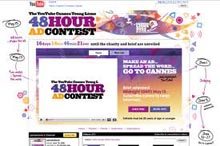
8 - Start A YouTube Competition
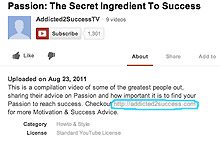
9 - Sell Links In Your Video Description
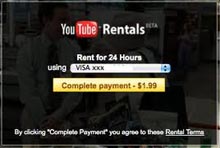
10 – YouTube Rentals
11 - Just Ask for It!
 e
e
Subscribe to:
Posts (Atom)